
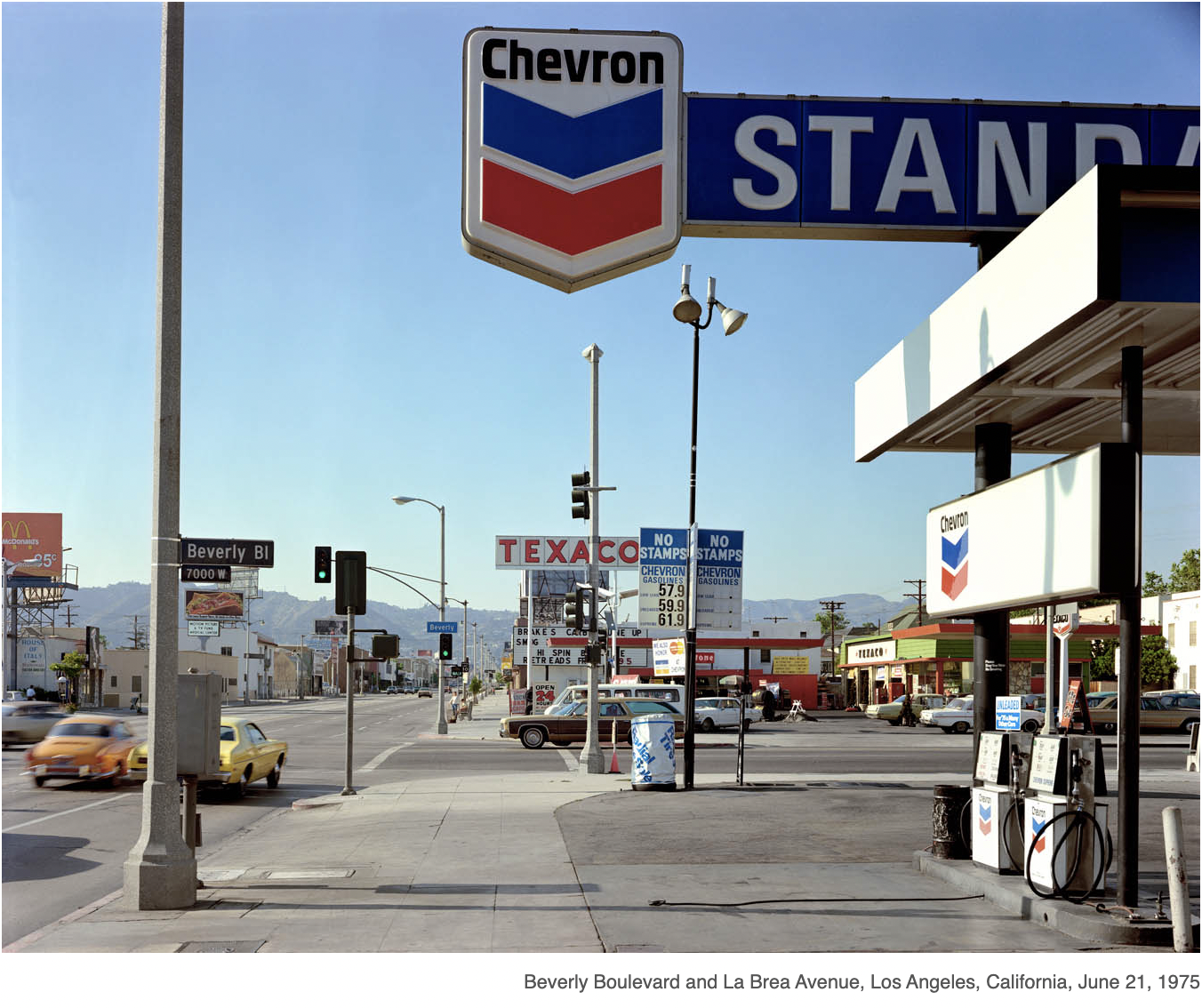
Photography is consumed in a manner that is often perceived to represent a true reflection of the captured content. Although the physical elements within an image contain information that is derived from our perception of reality, the photographer is essentially sharing their view or perceived truth. Whether this in the form of the subject matter itself, or the way in which a photograph is taken, the photographer is the story teller and can choose to reveal or hide as much as they wish to within the frame.
In Stephen Shore’s work Uncommon Places, the scenes are perceived as ordinary and candid. However, there is a glassy aesthetic that is achieved through the use of structure, within the artists work. There is a relationship between every line, angle and space between objects, resulting in a uniform and calm appearance, that demonstrates a systematic reality. As a result the scene becomes a stage and the objects become props that are positioned to reflect an ideal scenario.
This presents the question about whether any experience of the same place, is the same as another, as one ‘true’ reflection will never be the same as the other.
As Susan Sontag expresses:
“Photography has the unappealing reputation of being the most realistic, therefor facile of the mimetic arts.”

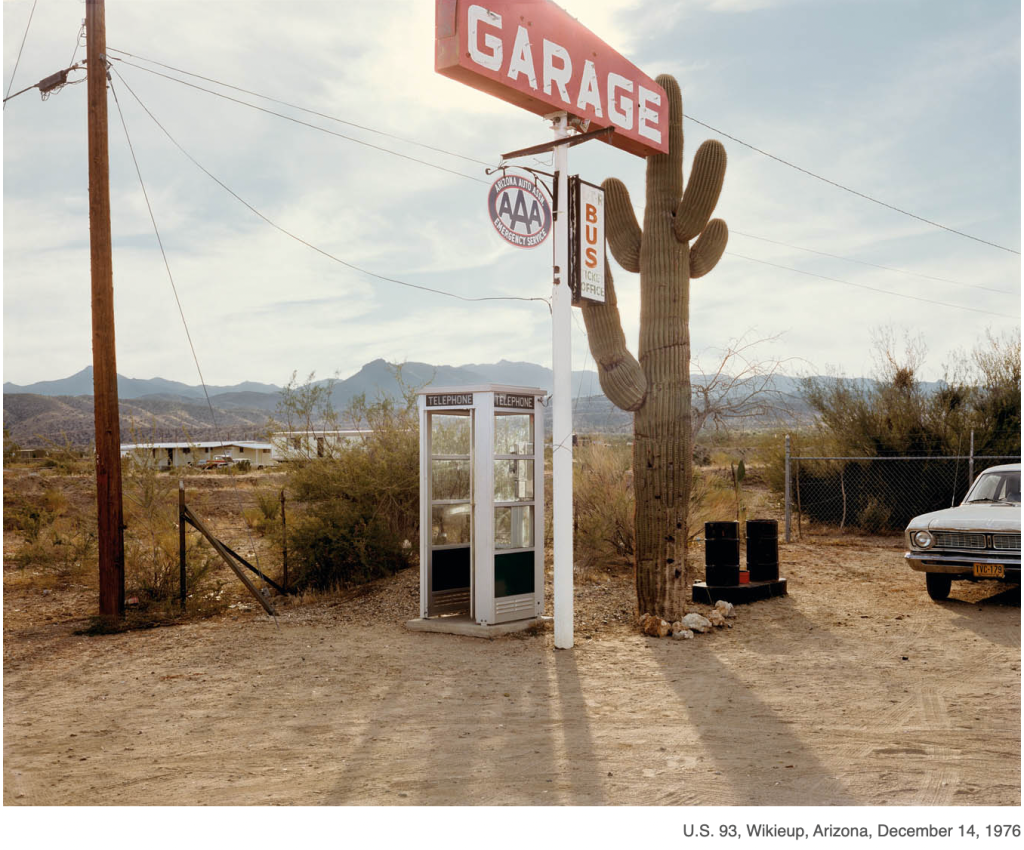

http://stephenshore.net/photographs/uncommon/index.php?page=1&menu=photographs

 capsule-blog.com